
An idea. A foundation. A living product.
From an HTML template to a website with character. Built on Django. Brought to life through engineering.
Explore the live demoEvery product starts with a question.
What if the next website could start with a thoughtful foundation? Keep the freedom to choose its visual language, connect real content and develop its logic without rebuilding the same starting point every time. This is the idea behind Wulver.
I am building Wulver as a foundation for developers who work with Python and Django, adapt HTML templates and create content-driven websites. The visual design gives a project its character. The architecture gives it room to grow. Bringing these two layers together is the heart of the project.
The first public release is now available. An idea that began with architectural decisions has become a working demonstration. You can follow its pages, read its articles and see how the individual parts form a coherent experience.
A beautiful interface attracts attention. A thoughtful foundation gives it a future.
Freedom on the surface. Structure underneath.
An HTML template is a starting point. To become a website, it needs content, routes, reusable components and a clear relationship between data and presentation. Wulver focuses on this transition: making a visual concept part of a Django application.
Design with character
Adapt an HTML theme to the project. Preserve its composition and visual identity while connecting templates to real content.
Content with structure
Think beyond individual screens: articles, categories and authors form relationships that make a website useful to its readers.
Room to evolve
Use Python and Django as the foundation for the next decisions. Extend the project around its needs and keep responsibility for the code.
The release has an address.
Open wulver.dev and you will find Story, a demonstration website running on Wulver. Its editorial layout brings together article previews, topic collections and author profiles. The demo shows how the foundation can take on a distinct visual identity.
Explore the categories, open an article and switch between Ukrainian and English. These familiar actions tell a more concrete story than a feature list: the product is already bringing content and interface together in a public website.
Open the Ukrainian demo ↗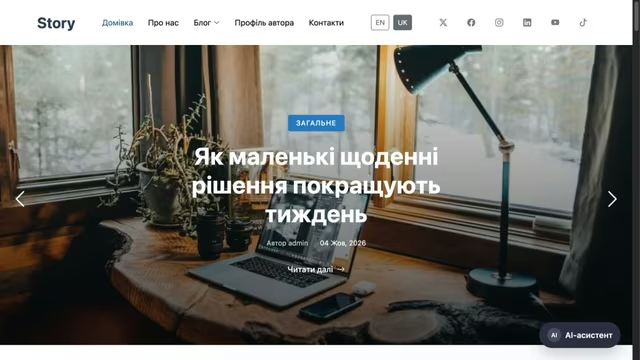
Built with AI. Directed by a developer.
Wulver also reflects the way I work today. Codex helps me explore the codebase, implement changes and iterate on ideas. It makes the development loop more flexible, while architectural decisions and the quality of the result remain my responsibility.
The value of this collaboration is in the working product: decisions become code, code becomes an interface, and the interface can be tested against a real task. Every change still needs context, review and a reason to exist.