AI-Powered, SEO-Ready Website Development in 2026 | Django & WordPress
AI-powered website development for fast, SEO-ready Django, WordPress and custom projects: technical SEO, Core Web Vitals, structured data and an AI assistant.
⚠ Before You Order a Website, Audit the Studio's Own Website
Check before you payA beautiful portfolio and a confident sales call are not proof of technical quality. Before choosing a web studio, open its own homepage in Google PageSpeed Insights and test the mobile version.
What to Look At
- Performance and real Core Web Vitals — especially LCP, INP and CLS
- Whether images, fonts and scripts are optimized instead of simply loaded
- Whether the page remains readable, stable and responsive on a phone
- Whether the site's structure, metadata and content show care beyond the homepage design
One score is not a final verdict: PageSpeed results vary and must be read in context. But if a studio sells high-quality websites while its own main page is slow, overloaded or technically neglected, that is a fair reason to ask difficult questions before you pay.
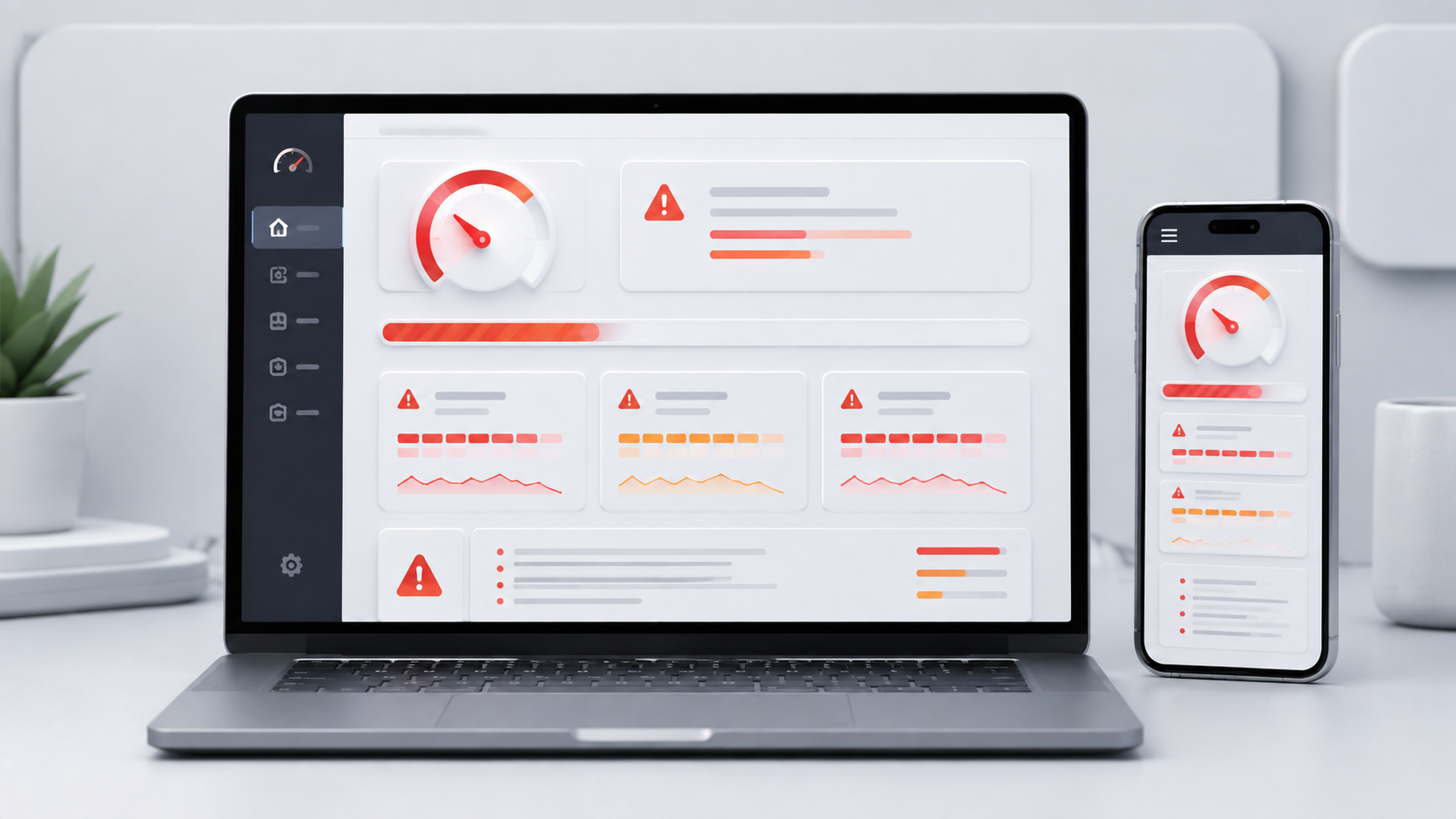
My own website is a public benchmark: its performance, structure and technical decisions are open to inspection, not hidden behind a sales presentation.
A Thoughtful Build, Not a Student Website
For a new custom project, my preferred foundation is Python and Django: it gives me control over speed, content models, SEO structure, integrations and future functionality. It is the best choice when a website needs to grow into a reliable digital system, not remain a one-off layout.
Django is not the only option. I can also build or improve a WordPress website and other platforms — with the same AI-assisted technical and SEO analysis. The goal is not to force a technology, but to make the chosen solution substantially better for users, editors and search engines.
A carefully engineered WordPress website starts from ₴30,000. It costs more than a quick student build because the work includes the details that determine whether a site remains useful after launch: performance, content structure, SEO foundations, image processing, forms, analytics and room for further development.
Alongside the website, the client receives an AI assistant for everyday work with the project — for example, to help prepare content, plan updates and keep the site moving forward after launch.
🎯 What Clients Are Looking for in 2026
Loading Speed and Core Web Vitals
Clients expect pages to appear instantly and without visual shifts. The focus is on LCP, INP, and CLS, as well as practices that speed up rendering.
- Image optimization (WebP/AVIF, responsive images, lazy loading)
- Minification and bundling of JS/CSS, removal of dead code, code splitting
- Caching policy (Cache-Control, ETag), CDN, and HTTP/2/3 for fast delivery
- Critical CSS and deferred loading of non-essential scripts
- Monitoring real-user metrics (RUM) and automatic degradation alerts
Mobile Responsiveness and Usability
More than half of traffic comes from mobile devices. The interface must be readable, taps must be accurate, and forms should be short.
- Mobile-first layout, responsive typography, and grids
- Proper hit areas for buttons, navigation states, and visible focus indicators
- Flexible media (video/images) that does not break the layout
- Testing on real devices and across different networks (Fast 3G/4G)
- Form optimization: autofill, input masks, minimum number of fields
Integrations with Business Tools
Websites increasingly operate as part of an ecosystem. Clients expect ready-made integrations without workarounds.
- CRM/ERP: lead transfer, deal statuses, customer synchronization
- Marketing: GA4 analytics, pixels, e-commerce events, email/SMS platforms
- Payments and delivery: payment gateways, cost calculation, tracking
- Custom webhooks and APIs for unique business processes
- Queues and retries for stable integrations during failures
Simple Content Management
The admin panel should be intuitive: a content manager without technical knowledge should be able to update pages easily.
- Clear content models and access roles
- Visual editors with components and block templates
- Media library with automatic image optimization
- Preview, revision history, and publication scheduling
- Multilingual support and localization without duplicated work
Trust and Security
Security is part of brand trust. Reliable data protection and service stability are essential requirements.
- TLS/HTTPS, HSTS, and modern encryption settings
- Protection against XSS, CSRF, SQL injection, and request rate limiting
- Regular dependency updates and CI checks (SAST/DAST)
- Backups, uptime monitoring, and incident logging
- Transparent privacy policy, cookie banner, and consent management
🔧 Technologies for Building Websites in 2026
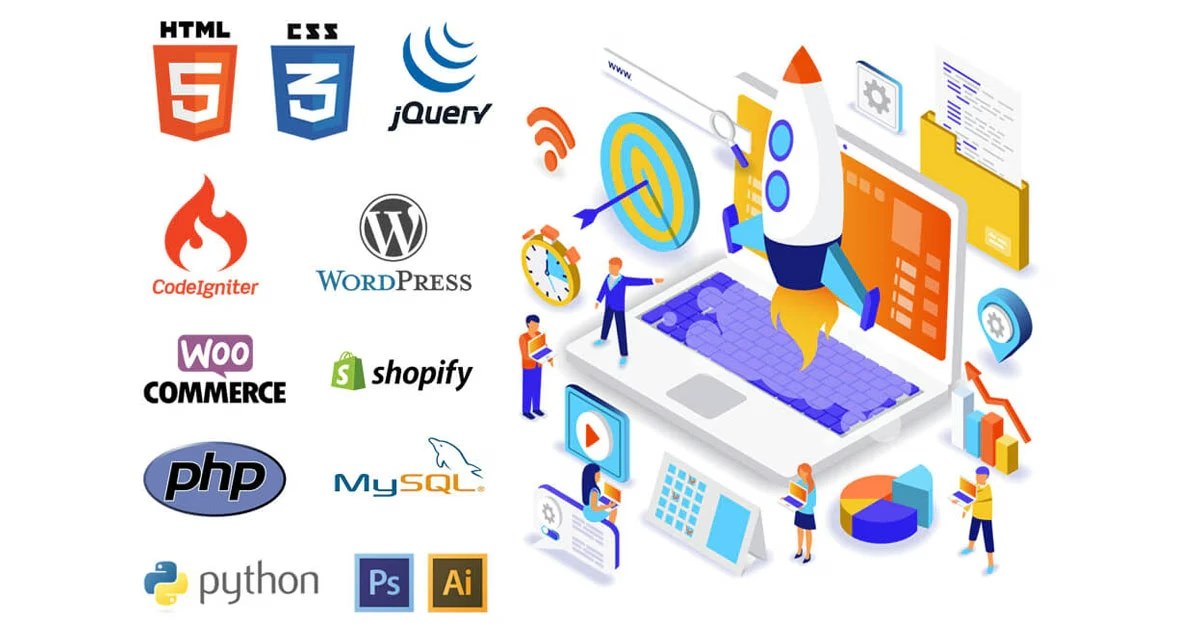

In 2026, choosing the technologies for building a website becomes a key issue for clients. It affects performance, flexibility, scalability, and maintenance costs.
PHP Frameworks and CMS
PHP remains a popular technology thanks to the large number of ready-made solutions. Laravel and Symfony are widely used for corporate websites and online stores. These frameworks provide strong security, clear architecture, and integration with modern services.
For a fast business launch, choosing a CMS such as WordPress, Joomla, or Drupal is convenient. In 2026, WordPress continues to lead among small and medium-sized businesses because it offers thousands of ready-made plugins, themes, and developers in virtually every country.
JavaScript and Node.js
Frontend development is increasingly centered around JavaScript and modern frameworks such as React, Vue.js, and Angular. In 2026, clients often request SPA applications (single-page applications) because they provide fast interaction and a better user experience.
Node.js is used to build fast server-side components and makes it possible to create complete full-stack solutions in a single programming language. This simplifies maintenance, reduces costs, and speeds up development.
Choosing Based on Client Needs
In 2026, technology choices are made not according to 'what is popular' but based on specific business requirements. A PHP CMS is sufficient for a blog or portfolio; Laravel or Symfony is suitable for a large marketplace; and React with a Node.js backend is a strong choice for dynamic web applications with extensive interactivity.
💰 Website Pricing and Budgeting in 2026
The cost of building a website depends on its type, functional complexity, integrations, and amount of content. Clients often plan budgets by category to estimate the cost of launch and ongoing maintenance.
Single-Page and Informational Websites
Basic CMS websites or simple landing pages. Prices start at $100–300. Suitable for presentations, small projects, and MVPs. At this entry level, limited resources mean technical support is not included.
- CMS (WordPress, Joomla, Drupal) for a quick start
- Simple structure: 1–3 pages
- Basic SEO optimization and responsive design
- Hosting and domain costs are added separately (~$5–15/month)
- Technical support is agreed individually
Basic Corporate Websites
Prices range from $1,500 to $3,000. Suitable for small and medium-sized businesses, landing pages, and company presentations.
- Standard template-based design or minor customization
- Several pages: Home, About, Services, Contacts
- Basic SEO settings and performance optimization
- Simple CMS or admin panel for content management
- Hosting and domain costs are calculated separately
Online Stores
Prices range from $3,000 to $7,000. Suitable for e-commerce and small to medium-sized trading platforms.
- Integration with payment systems and delivery services
- Product catalog with filters and search
- Advanced admin panel for managing products, orders, and promotions
- Loading speed optimization and mobile responsiveness
Complex Projects with Integrations
Prices start at $7,000+. Suitable for large businesses, marketplaces, and portals with numerous integrations.
- Integrations with CRM, ERP, third-party APIs, and process automation
- Complex website logic: SPA applications, custom modules, and services
- Multilingual support and multi-level access control
- Full Core Web Vitals optimization and security best practices
What Affects the Cost
- Design: unique layouts, animations, UX/UI details
- Functionality: interactive elements, forms, APIs, custom solutions
- Content: number of pages, text, images, multimedia
- Support and updates: SLA, hosting, security, backups
- Mobile responsiveness and SEO optimization
- Custom options: integrations, special functionality, non-standard technologies — discussed separately and not included in base prices
Many competitors leave these nuances unmentioned, so we inform clients upfront about all additional options that may affect the budget.
📊 Web Studio Ratings and Offers in 2026
Choosing a web studio for website development in 2026 depends on several key factors that directly affect the quality of the final product and its compliance with modern web development standards.
Criteria for Choosing a Studio
- Experience: number of completed projects, task complexity, delivery timelines
- Portfolio: design, UX/UI, technical solutions, integrations, and client results
- Reviews: online reputation, recommendations, and client case studies
- SEO and performance: whether the studio considers Core Web Vitals, image optimization, and caching
- Technologies: which frameworks and CMS platforms are used and how well they align with modern standards
Studio Specializations
- E-commerce: online stores, marketplaces, and payment system integrations
- B2B projects: corporate portals, internal systems, and complex integrations
- Corporate websites and landing pages: presentation pages and branded websites
- SPA and complex web applications using JavaScript/Node.js, React, Vue, or Angular
- CMS projects (WordPress, Drupal, Joomla) for fast content launches
The Trend Toward Agile Teams
In 2026, there is a noticeable trend toward choosing small, flexible Agile teams instead of large corporations. Such studios make it possible to:
- Respond faster to changes in requirements and client requests
- Maintain direct contact with developers and designers
- Reduce management costs and intermediary layers
- Provide transparent pricing and budget control
As a result, web studio rankings in 2026 are shaped not only by company size, but also by efficiency, expertise, and the ability to deliver modern web projects quickly.
🤖 AI in Website Development
Modern web studios actively use artificial intelligence to optimize workflows and create content, but a human UX/UI designer still remains a key factor in a project's success.
Content Generation
- Automatic creation of text for blogs and articles
- Generation of product descriptions for online stores
- Preparation of SEO-optimized content
- Ability to quickly create drafts and content variations
Automation and Analytics
- Checking website accessibility for people with disabilities
- SEO analysis and recommendations for improving rankings
- Detecting Core Web Vitals and performance issues
Chatbots for Users
- Automatic answers to common customer questions
- 24/7 sales and support assistance
- CRM integration for a personalized approach
Despite all AI tools, a human UX/UI designer remains essential for creating an intuitive, attractive, and effective interface.
🚀 SEO-Ready Websites in the AI Era
AI has raised expectations for websites. Search engines do not ignore a website simply because AI was not used to build it, but a slow, unclear, poorly structured website has far less room for error than it did before. Today, a website needs to be genuinely useful, technically clean, easy to understand and fast on real devices.
What a Search-Ready Website Actually Includes
- Clear page architecture, search intent and a semantic keyword map
- Useful SEO copy, precise titles and descriptions, and logical internal linking
- Structured data that can adapt to pages, articles, categories and the blog
- Optimized images, responsive media and stable Core Web Vitals
- Accessible markup, secure forms, analytics and a foundation that is easy to improve
How I Use AI Without Replacing Judgment
AI helps me analyse structure, content opportunities, image usage, technical issues and search intent faster. The final decisions still come from a human review of your business, audience and priorities — not from publishing generic AI text.
This makes it possible to see more weak spots before launch and build a stronger, more coherent site for people and search systems alike.
🏆 Conclusions
- In 2026, clients expect websites to be fast, accessible, and well integrated.
- Web studios should offer technologically advanced solutions that remain easy to use.
- AI is becoming a must-have tool for optimizing processes and content, but it does not replace the human expertise of UX/UI designers.
Therefore, the success of web projects in 2026 depends on combining modern technologies, flexible processes, and close attention to user needs.