01PERFORMANCE
Fast where it matters
Caching, efficient database queries and pagination reduce repeated work. Actual response times depend on the code, data and infrastructure.
Cache · QuerySets · profiling
A Python framework for websites and web applications with their own logic. Fast responses, flexible data models and room to grow — when the architecture is designed around your task.
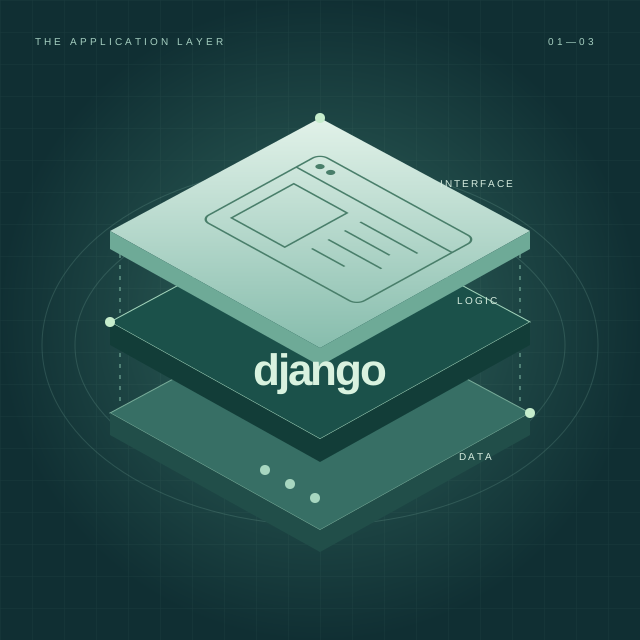
Django brings common backend tools together, so development can focus on what makes your project different.
Caching, efficient database queries and pagination reduce repeated work. Actual response times depend on the code, data and infrastructure.
Define your own entities, roles and workflows. Independent Django apps let a catalog, customer account and booking system evolve within one project.
The ORM connects Python models to the database. Migrations track schema changes, while constraints and transactions help keep related operations consistent.
Authentication, permissions, CSRF protection and template escaping provide built-in safeguards. Correct configuration, updates and access checks remain part of development.
Connect payments, CRM and delivery through their APIs. Python libraries and tools such as Django REST Framework help build integrations and APIs for other clients.
The built-in admin provides a starting point for managing records, filters and permissions. Custom interfaces can handle workflows that need more than standard forms.
A framework alone does not guarantee a fast website. I work with the full request path: from database queries to the response and what the browser renders.
Profile response time and database queries on representative pages.
Use indexes, select_related and prefetch_related where appropriate.
Cache suitable data; move lengthy jobs to a configured background worker.
Test under expected load and optimize images, CSS and JavaScript.
Scaling is a set of architectural decisions. Add complexity when real usage justifies it.
Distribute requests across instances, with shared storage, sessions and caching configured for the deployment.
Async views under ASGI can help with concurrent I/O. Benefits depend on compatible middleware and the operations being performed.
Modular apps, migrations and automated checks make it easier to introduce features and maintain existing behavior.
Content platforms, catalogs, customer portals, booking systems and internal tools with custom data and business rules. The scope determines the architecture.
No. Server-rendered templates or a separate frontend can implement a custom visual identity. Django handles the server-side logic and data.
For a simple static page, a smaller solution may be enough. Django is particularly useful when structured data, permissions and custom workflows matter.
This website runs on Django. Tell me what your project should do, and we can define its architecture, integrations and next steps.
Discuss a Django project ↗KATYUSHYN · DJANGO DEVELOPMENT